World Rugby research consultant Ross Tucker has blasted former Wallabies winger Drew Mitchell for his criticism of the new tackle laws that will be trialed at the upcoming World Rugby Under 20 Championship in France later this month.
The new laws will see a post-match sanctioning system introduced where any high tackle penalty, any head injury, any high tackle that was missed on the pitch and any head contact will be reviewed by a citing commissioner who will then determine if a high tackle warning needs to be issued to an offending player.
For the World Rugby U20 Trophy the following will apply:
Law 9.13 The acceptable height of the tackle is reduced from the line of shoulders to below the nipple line.
A player must not tackle an opponent early, late or dangerously. Dangerous tackling includes, but is not limited to, tackling or attempting to tackle an opponent above the nipple line even if the tackle starts below the nipple line.
Mitchell was critical of the law and said that 'we will soon be watching touch rugby!!' given World Rugby's recent clampdown on dangerous and high tackles.
https://twitter.com/drew_mitchell/status/1000137005332815872
Tucker, who announced the new law trials in a video on the World Rugby website earlier this week, responded to Mitchell's criticism and said that the Australian was part of rugby's problem with head injuries.
https://twitter.com/Scienceofsport/status/1000249649901355009
Two high tackle warnings in the U20 tournament will result in a one match suspension as World Rugby aim to discourage tacklers from tackling in an upright position.
"We wanted to get the players lower and we knew that a player who tackled lower was less at risk than a player who tackled higher," said Ross Tucker, a World Rugby research consultant.
"The first paradox is that lowering the height of the tackle doesn't only protect the ball carrier but it actually protects the tackler.
"Our research had shown that the tackler was more at risk than the ball carrier. The directive was applied because we saw that there was a 54% increase in high tackle penalties and a 41% increase in yellow cards, but even after those increases, we don't believe they'd be frequent enough or severe enough to actually change the behaviour of the player the way we want.
"We put that back to the experts and the coaches and the officials and what they said was don't ask the referee on the field to take all of the onus on himself.
"Can we not create some system after the match - a post-match sanction process - that punishes the behaviour that our research recognises as being dangerous.
"That behaviour is an upright player and we have got the evidence that shows if you tackle in an upright body position the risk to yourself and your opponent is much higher than if you bent at the waist.
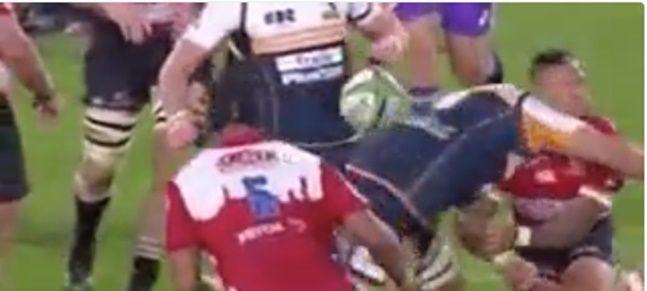
"That's the behaviour we want; we want tacklers bent at the waist. At the U20 championships coming up in May we will trial a post-match sanction where any high tackle penalty, any head injury to either player, any high tackle that was missed on the pitch but was picked up after the match, and any head contact will be reviewed by a citing commissioner who will ask one question.
"They will ask 'is the tackler upright or are they bent at the waist?'
"If the tackler is upright they will receive a high tackle warning and if he's bent at the waist no problem. They were in the safe position so we are happy with the decision on the field.
"If they're upright- high tackle warning - because that's the type of behaviour we want to move the player away from."
Tucker is hoping that the possibility of sanctioning and suspensions will force coaches to re-evaluate their players tackle techniques and try and encourage players to tackle low instead of high.
World Rugby will trial the new directive at the World Rugby Under 20 Championship and if it's deemed successful they may look at introducing the trial law at other tournaments.
World Rugby Chief Medical Officer Dr Martin Raftery said that tackles that increase the likelihood of head injuries will be cited.
"This trial is designed to remove the tackler’s head from a high-risk situation through a deterrent based on a combination of law amendment, sanction and technique change," said Raftery.
"Tackles that increase the risk of head injury will be cited. The match citing commissioner will issue a "High Tackle Warning" to the tackler who is deemed to be upright (not bent at the waist)."


