


Football

Share
Published 18:19 13 Sept 2019 BST
Explore more on these topics:
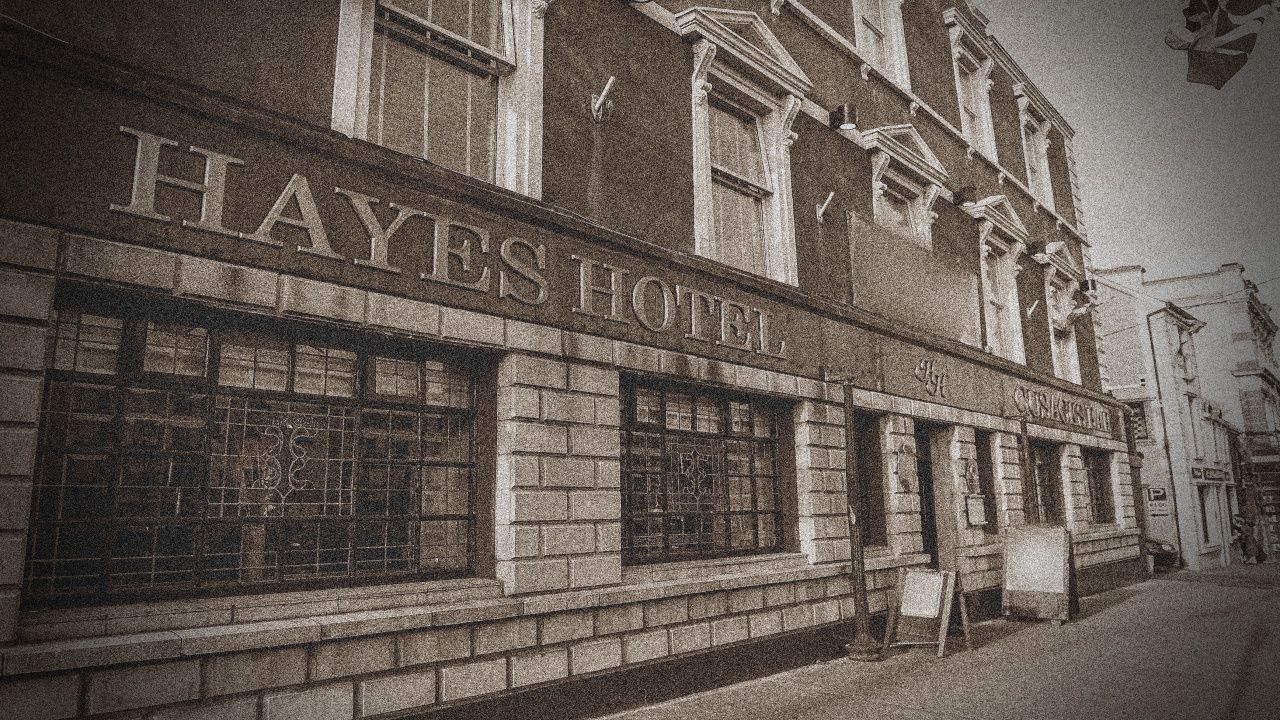
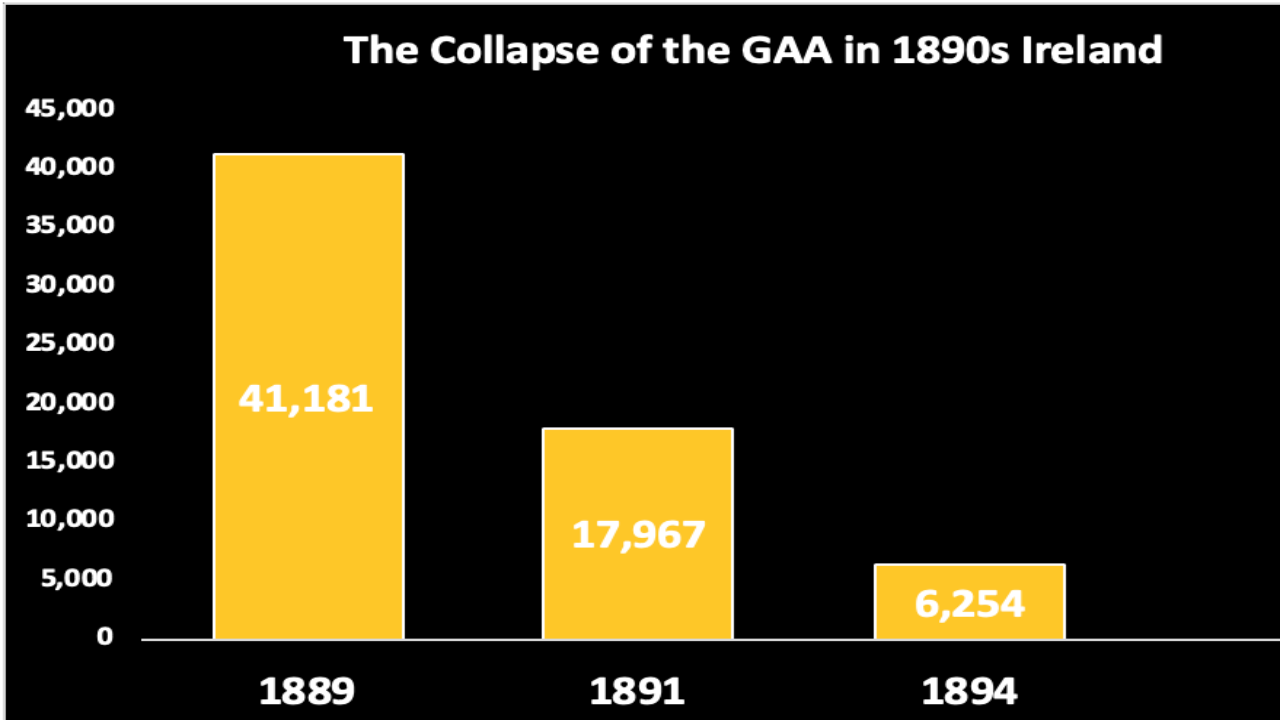
From 'Quenching the Prairie Fire' by Dr Richard McElligott
A large drawback of football at the time was the sheer boredom of the game as a spectacle. For example, when Wexford and Cork managed 5 scores between them in the 1893 Final, the Freeman’s Journal declared that “rarely has a better exhibition of football been witnessed in the metropolis!”. Expectations for the game were through the ground at that point. The GAA was quite simply on its knees, on the verge of extinction and police reports at the time noted this. Enter Richard Blake, who is credited by some, particularly Dr. Richard McElligott, with saving Gaelic Games in the country. Blake, a renowned match official and eventual Secretary of the GAA, brought in a series of rule overhauls in this decade that helped drag football from the abyss it was teetering over. However, this was largely outweighed by pretty heavy deterrents. Players literally took their own lives into their hands when playing Gaelic Games at times. A combination of a lack of stringent rules and ineffective referees led to a number of recorded instances of players actually dying on the field in this decade. For example, in April 1897 Willie John O’Connell was struck in the head in a club hurling game in Cork City and died immediately. In August 1891, Benburb’s David Irons received a fatal kick to the stomach in a match against Clondalkin Round Towers. Perhaps the most shocking of these deaths came in September 1893, when a player from Doon was fatally stabbed in the heart by a crowd member during a match against Cappamore in Limerick, apparently due to a land dispute.
These crowd invasions were very common, and a number of games were called off as a result during this period. Matches were also routinely abandoned due to players walking off the pitch in protest at a refereeing decision, violence or teams simply not showing up to fulfil fixtures.
The violence, alcohol consumption and lack of clarity around the rules that were endemic in the GAA are the time are crucial in understanding the frankly bonkers fate of the first ever All-Ireland Football Final. It was not necessarily unusual for the time, but it certainly is when you consider how far Gaelic Games have come.
Still with me? Good.
However, this was largely outweighed by pretty heavy deterrents. Players literally took their own lives into their hands when playing Gaelic Games at times. A combination of a lack of stringent rules and ineffective referees led to a number of recorded instances of players actually dying on the field in this decade. For example, in April 1897 Willie John O’Connell was struck in the head in a club hurling game in Cork City and died immediately. In August 1891, Benburb’s David Irons received a fatal kick to the stomach in a match against Clondalkin Round Towers. Perhaps the most shocking of these deaths came in September 1893, when a player from Doon was fatally stabbed in the heart by a crowd member during a match against Cappamore in Limerick, apparently due to a land dispute.
These crowd invasions were very common, and a number of games were called off as a result during this period. Matches were also routinely abandoned due to players walking off the pitch in protest at a refereeing decision, violence or teams simply not showing up to fulfil fixtures.
The violence, alcohol consumption and lack of clarity around the rules that were endemic in the GAA are the time are crucial in understanding the frankly bonkers fate of the first ever All-Ireland Football Final. It was not necessarily unusual for the time, but it certainly is when you consider how far Gaelic Games have come.
Still with me? Good.
“A Dublin player struck a member of the Cork team. A bystander, a Charleville man, shouted ‘foul’. A Young Irelander ran at the spectator and struck him, but got promptly a knock down blow in return. The usual crowd then ran in and the match was interrupted. A few minutes later the Dublin team left the field and objected to Cork getting the match on the ground that the field was badly kept, and that one of their players had been struck.” - Cork Examiner, 22nd April 1895Whether or not the crowd member was from Cork or not turned out to be quite fiercely contested. The Independent specifically mentions that he was “not a Cork man”, and the Cork county board rep was quoted in a later meeting as saying “we are of the opinion that he was not a Cork man, and he must so be from Timbuctoo”. Regardless of that, the game was abandoned by Dublin for those two reasons; bad pitch, worse crowd. So, the first All-Ireland Football Final replay was never actually completed. There was no winner. Both sides claimed it. But we’re not finished yet. Buckle up.

The Cork Examiner, 22nd April 1895. Courtesy of the National Library of Ireland.
“I am authorised by Cork to withdraw my membership on the Council, and, furthermore, I beg to inform this Council that the Cork people will give to this team that beat Young Irelands a set of medals as valuable as was ever presented. This is my resignation as member of the Council, and the treasurer of the Central Council will follow in my footsteps. Good evening, gentlemen.” - Cork Examiner, 29th April 1895
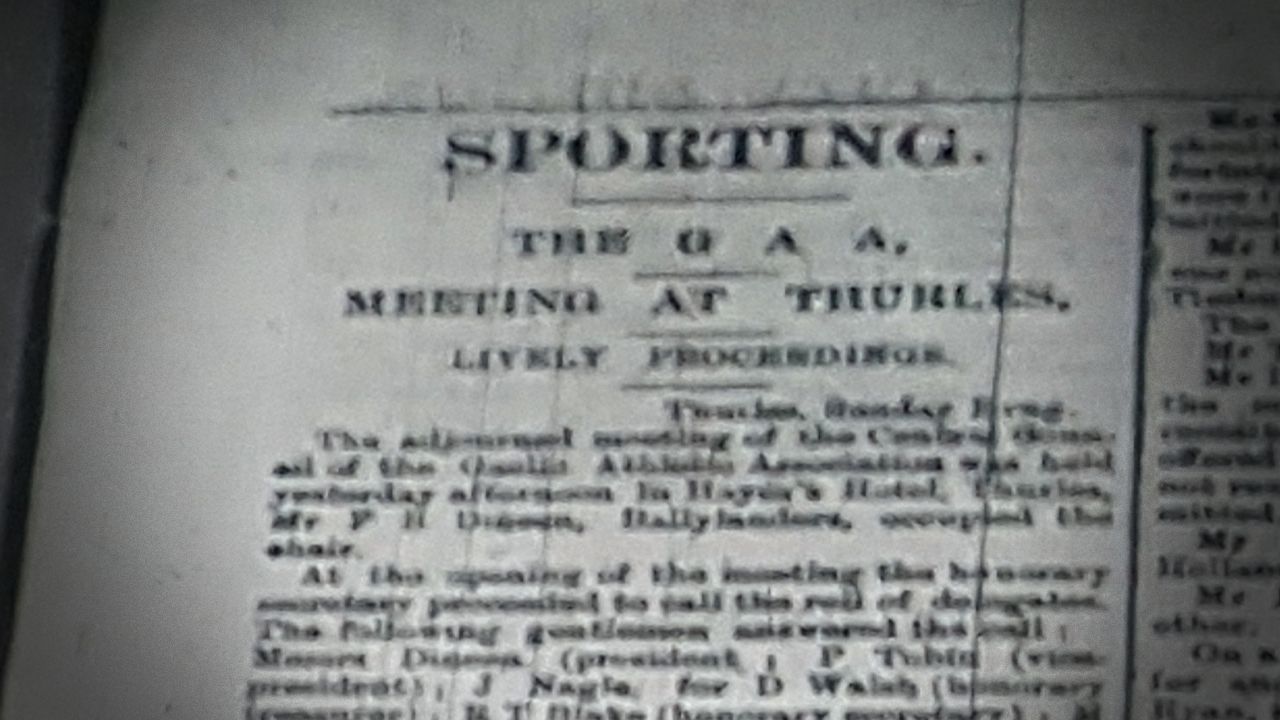
The Cork Examiner, 29th April 1895. Courtesy of the National Library of Ireland.
He was true to his words. The game was never replayed, despite being fixed for three weeks’ time. Newspaper reports on that weekend indicate that the new club championship season had begun, with the Examiner reporting on Cork club games taking place that weekend and the Independent similar with Louth county clashes. Dublin and Young Irelands were declared champions for the third time in four years. Cork were consigned to runners-up. Officially. But, on the 30th July, at the Nils clubhouse, the Cork team were presented with a set of winners medals. Although Deering himself was not present, the Mayor of Cork Patrick Meade obliged proceedings. Meade was also unequivocal in his declaration of Nils as champions, saying as he gave out the medals that the Cork side had“defeated the famous Young Irelands. I am sorry some misunderstanding arose in connection with the last match as I believe that the Dublin Gaels as a body are not antagonistic to Cork. But…this trouble was created and fomented by a small section of Dublin who hold the opinion that the Young Irelands should never suffer defeat. I am positively certain that the Dublin Gaels…now hailed them (Nils) as the winners of the Football Championship for 1894.” - Cork Examiner, 3rd August 1895The Cork county football and hurling champions then refused to take part in the 1895 All-Ireland Series in protest at the GAA’s decision to award the title. They would go on to organise their own tournaments until the schism was rectified. Deering would eventually go on to become President of the GAA, before his death in 1901.
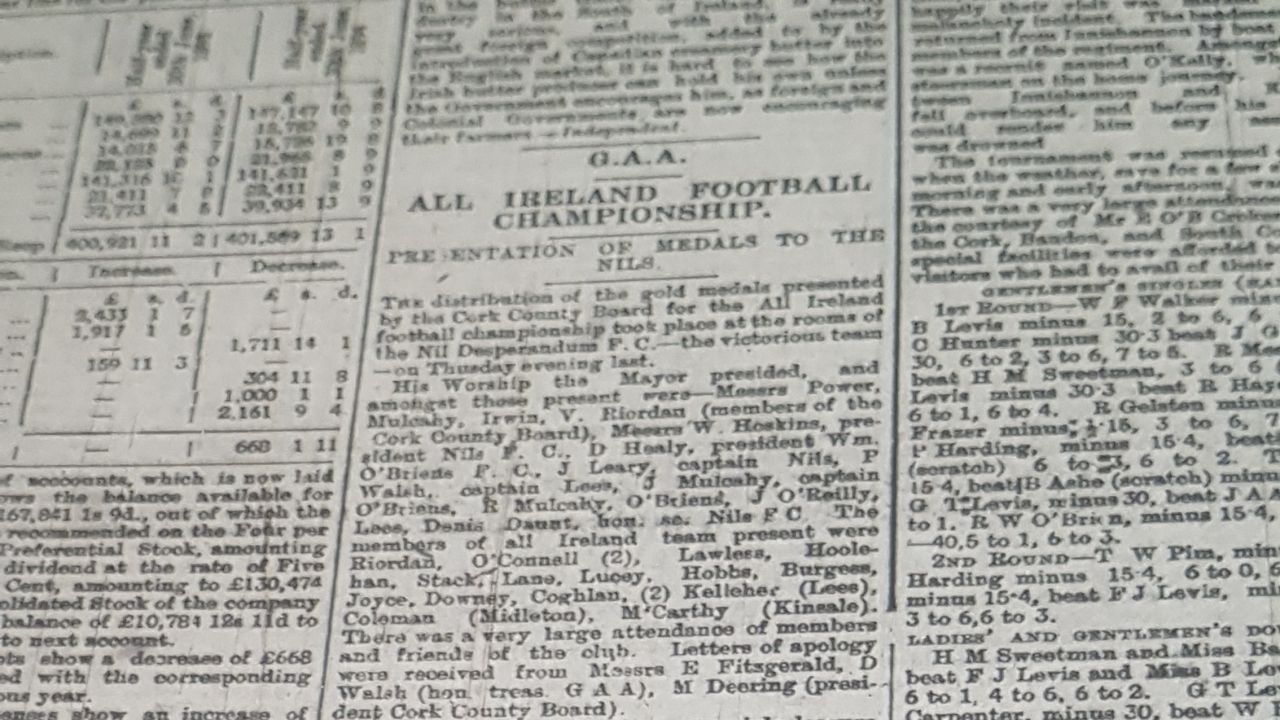
The Cork Examiner, 3rd August 1895. Courtesy of the National Library of Ireland.
Young Irelands were champions, officially at least. While this story may seem scarcely believable at times, it certainly wasn’t the only contentious final that decade. In fact, Young Irelands other two titles in 1891 and 1892 ended in similar circumstances. In 1891, they were awarded the title over Cork (you can see why they lost the head in 1895) after one of the Rebels’ goals was chalked off three hours after the final whistle. In 1892, against Kerry, the Dublin fans were the ones to blame for a dangerous atmosphere. It led to calls for a replay from the Kerry captain, published in a national newspaper, that Young Irelands initially agreed to, and then refused to play. Chalk another one up for the Dubs, I think. In fact, if you take a look through a list of the hurling and football finals in that decade, you realise that very few of them are straightforward. Some things never change, some things stay the same. There you have it: the first ever All-Ireland Football Final replay, the 1890s in the GAA and question marks over Dublin’s first three All-Ireland titles. If Saturday’s final has even half the drama, we’re in for one hell of a battle. With thanks to Dr Richard McElligott and his extensive research into the GAA during this period and to Katherine McSharry and the staff of the Reading Room at the National Library of Ireland.
Football

Football

Football

Football
Live sport on TV in Ireland this weekend – Football, GAA, Rugby – April 24th to 26th
Some huge clashes! The ultimate TV guide for live weekend sport in Ireland is back! It’s another huge week in the Premier League with Arsenal hosting Newcastle, there are a host of massive inter-county championship matches in both hurling and Gaelic football, and there is an intriguing Irish derby in the URC to look forward […]
Football
4h
Waterford legend slams GAA over hurling final change in sensational rant
He did not hold back in the slightest! Five-time All Star John Mullane let his feeling be known on the GAA’s idea to change the date of next year’s National Hurling League Division 1A final. According to reports, the proposal has a strong chance of coming to fruition, and would see the final played at […]
Football
1 day ago
Live sport on TV in Ireland this weekend – Football, GAA, Rugby – April 17th to 19th
Football


